
Checking for a Warrant in Livingston
Start with a phone call to the town. Ask town hall or the police department for the mayor's court clerk in Livingston, and ask whether an ordinance case is open and whether a warrant was issued. Have the citation or ordinance number, the full name, and the appearance date ready. If the clerk says the matter belongs to the district court, take that answer to the parish clerk rather than assuming the town court controls it.
Livingston Warrant Records and Town Police
The Town of Livingston Police Department works from 20550 Circle Drive, answers (225) 686-7153 as a non-emergency line, and staffs its counter from 7:00 a.m. to 4:00 p.m. That page lists the department's own contact details.
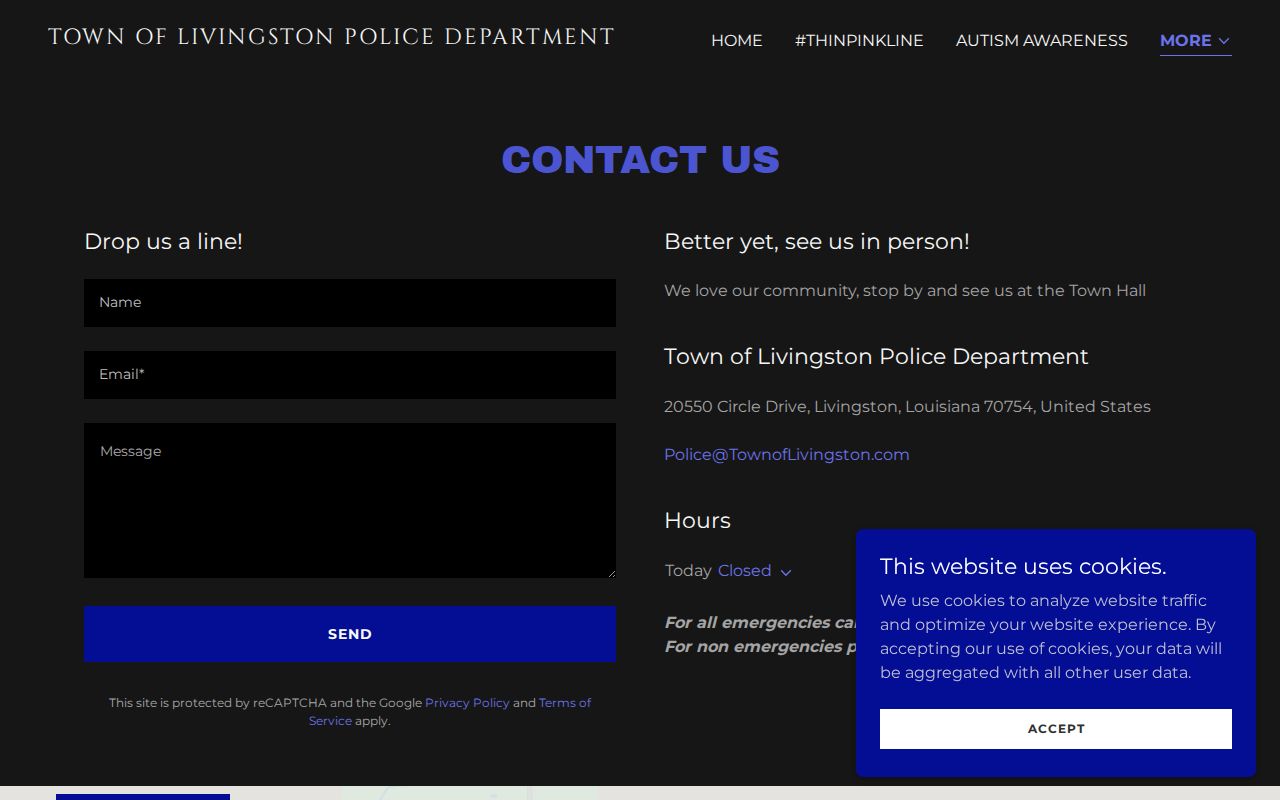
No online warrant list exists, so that Livingston phone contact is where a town ordinance question starts and ends.
Livingston Police and Municipal Court
The town offices and the police department share the Circle Drive address in Livingston, and the town contact number is (225) 686-7153. Town hall keeps hours of 7:00 a.m. to 5:00 p.m. Monday through Thursday. The police counter runs shorter hours. The mayor's court handles town code matters, not felonies. A town citation and a district court file are separate records kept by separate offices.
Livingston Warrant Records and the Courthouse
Two offices share the Livingston name and little else. Town hall at 20550 Circle Drive holds the town's records. The courthouse and sheriff's headquarters at 20300 Government Boulevard hold district court files and parish service records. Call the wrong one and you still get a courteous answer, usually with a referral across town. Read the letterhead or the citation first.
Livingston Warrant Types
A Livingston town warrant grows from a code violation, an unpaid town fine, or a missed mayor's court date. Town code gives the court jurisdiction over town code offenses, the power to punish contempt, and the power to issue subpoenas and warrants. Felony charges and state traffic citations written outside town limits take the parish route instead. A town warrant will not show on the sheriff's most wanted page. A parish warrant will not appear in the town file either.
Mayor's Court Warrants Under the Town Code
The town's codified ordinances are the legal backbone of a Livingston mayor's court warrant. They place ordinance cases in that court, allow it to punish contempt, and assign process service to the marshal or chief of police. That structure is why a town warrant moves through the police department rather than a sheriff's warrant division. The court issues the warrant. A town officer serves it.
Inside a Livingston Warrant Record
No town portal exists, so a Livingston warrant record is whatever the clerk reads from the docket. Ask for every item in one call.
| Citation or Ordinance Number | The town's identifier for the case. |
|---|---|
| Ordinance Section | The town code provision the citation names. |
| Court Date | The mayor's court setting that was missed. |
| Amount | The fine, costs, or reinstatement figure the court sets. |
| Status | Open, paid, recalled, or satisfied as the court records it. |
No Online Warrant Portal for the Town
The town publishes no warrant list, search form, or payment portal for court matters. The police contact page is not a records database either, so the Livingston clerk is the only confirmation channel.
Ask the town: Request the citation number, the next court date, the current status, and the payment or appearance options in a single call.
How Livingston Warrants Fit the County System
The town court answers for town code matters. Everything else belongs to the parish system. Felony charges go to the 21st Judicial District Court, and the Clerk of Court keeps those files. The Livingston Parish warrant records overview explains how the parish courts, the clerk, and the sheriff divide that work.
Livingston Warrant Records or a Parish File
Decide which court controls the matter before paying anyone. A citation naming a town ordinance, issued by the town police, belongs to the mayor's court in Livingston. Paper naming a state charge, a felony, or an outside agency belongs to the district court and the parish clerk. Unsure callers can ask the issuing agency which court received the citation.
Livingston Warrant Records and Public Access
A Livingston town court file is a public record unless an exception applies. Send a written request to the town naming the person, the citation or ordinance number, the approximate date, and the specific document wanted. Louisiana's Public Records Law governs the response, and the town is the custodian of its own court records. Sealed or restricted material stays out of the public copy.
Livingston as Parish Seat and Incorporated Town
The 2020 Census counted 1,877 people in the town of Livingston, which makes it the third largest incorporated place in the parish even though it is also the parish seat. The courthouse is the reason the name shows up on so much parish paperwork. That coincidence produces the most common local mix-up. A letter addressed to Livingston may concern a town ordinance case or a district court file. Only the content of the notice settles which office to call. The shared name does not make the offices interchangeable, so match the paperwork to the right court before picking up the phone. Note: Call the town for town code matters and the parish clerk for district court files, because the shared name does not make the offices interchangeable.